
By Fabio Ishisaki and Maurício Angelo*
Financial institutions have had their liability for environmental damages severely weakened by the advent of Federal Law No. 15,190/2025, known as the General Environmental Licensing Law (Lei Geral do Licenciamento Ambiental, or LGLA). First and foremost, the law established that, upon presentation of a copy of an environmental license, any responsibility is extinguished for institutions supervised by the Central Bank of Brazil that finance activities or ventures subject to environmental licensing.
Unlike its original stated purpose, this new law did not bring about the standardization of procedures and requirements. Instead, it introduced license categories that bypass rigorous validation and analysis by environmental agencies—such as the License by Commitment and Adherence (Licença por Adesão e Compromisso, or LAC), which may be issued through self-declaration by the entrepreneur. In other words, there will be no meaningful oversight of the full range of activities and ventures that affect the environment. No environmental study is required—only a basic project characterization—and both this report and annual site inspections may be conducted on a sample basis, fundamentally undermining the assessment of projects under licensing.
To make matters worse, the renewal of such licenses may be completed through a simple online declaration by the entrepreneur, without any review by the licensing authority. This amounts to the collapse of environmental management for projects that rely on natural resources, since these licenses do not guarantee even a minimum standard of due diligence in investments.
Another critical point is the shift to subsidiary—rather than joint—liability for those who finance such projects, which runs counter to the established environmental principle of joint liability for indirect polluters. It bears emphasizing that Federal Law No. 6,938/1981 (the National Environmental Policy Act) requires government financing and incentive entities to demand not only an environmental license, but also compliance with the norms, criteria, and standards issued by the National Environment Council (CONAMA)—clearly going well beyond the mere presentation of a license copy as grounds for exemption from liability or for the relaxation of rules.
That same law defines as a polluter any individual or legal entity, whether under public or private law, directly or indirectly responsible for activity that causes environmental degradation. It is worth reflecting on the potential liability of financial institutions as indirect polluters through the financing of businesses with their funds. It should be recalled that a major bank was recently ordered to pay more than R$47 million for extending credit to an unlicensed operation—a case that already illustrates the possible gaps in due diligence and the importance of maintaining strict accountability rules.
The stakes extend well beyond Brazil’s borders. With the EU–Mercosur trade agreement now in force—uniting two blocs representing US$22 trillion in GDP and over 700 million people—European financial institutions and investors are increasingly exposed to Brazilian commodity and mining supply chains. The deal was sold to European citizens on the promise of binding environmental safeguards; yet those safeguards presuppose a functioning licensing system on the Brazilian side, with credible oversight and meaningful liability for those who finance environmentally damaging operations.
The new licensing law dismantles precisely that foundation. Foreign banks and institutional investors that continue to channel capital into Brazilian mining and agribusiness under the new regulatory framework cannot claim ignorance of what that capital enables—nor can they claim, under the EU’s own Corporate Sustainability Due Diligence Directive, that presenting a self-declared license copy constitutes adequate environmental due diligence.
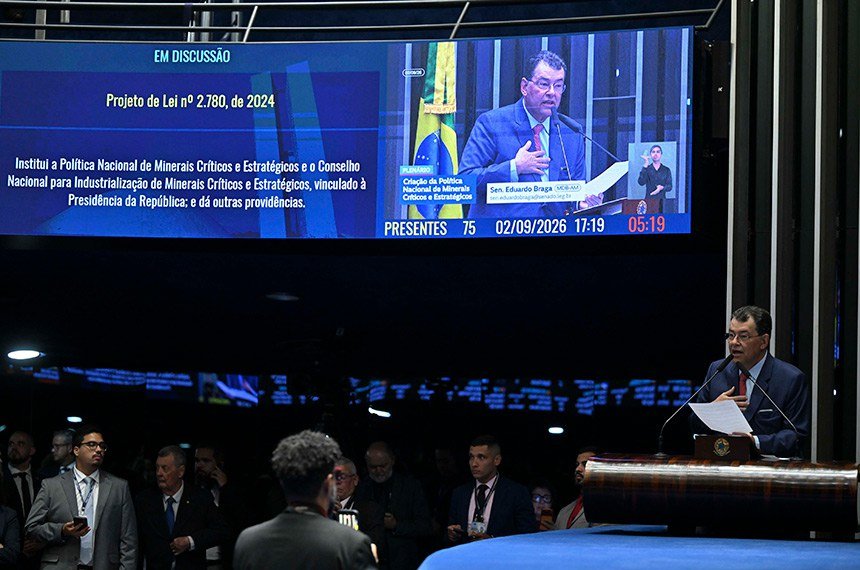
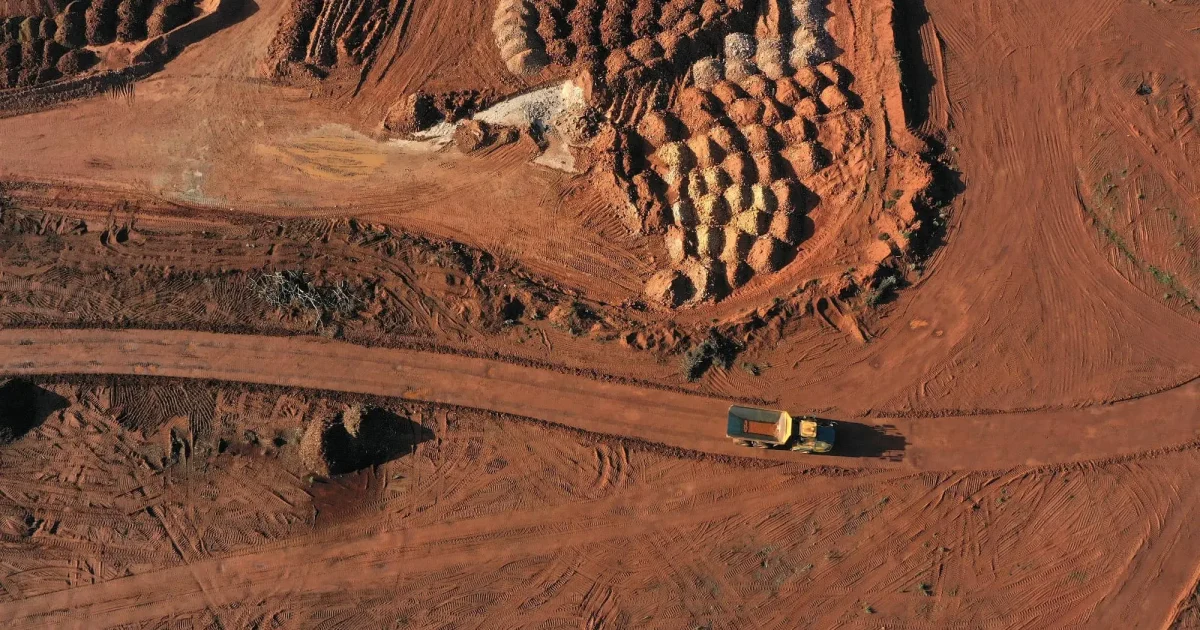
In the case of mining—a sector that accounts for roughly 2% of Brazil’s GDP and is experiencing a new boom driven by the global rush for so-called critical and strategic minerals—removing the possibility of holding financial and credit agents accountable is a clearly bad idea.
Since 2015 alone, Brazil has been the site of three of the worst mining disasters in recent world history: the dam collapses at Mariana (2015) and Brumadinho (2019), which killed 289 people and contaminated hundreds of kilometers of rivers all the way to the Atlantic Ocean, and the still-unfolding disaster in Maceió, which has displaced tens of thousands of people from their homes.
Major disasters like these do not happen by chance; they are not built overnight. The accountability process, already difficult and still ongoing, is likely to deteriorate further under the new licensing law. The day-to-day reality of mining, however, goes far beyond the large-scale disasters that attract public attention. The critical minerals boom—essential for renewable energy, but also for the military and technology industries—raises serious questions about the trajectory of the energy transition, which has been used as justification for the sector to receive tens of billions of reais in public and private funding and to accumulate incentives and tax benefits at various levels of government.
All of this is happening without adequate social and environmental safeguards, without respect for the right to free, prior, and informed consent of traditional communities such as indigenous peoples, quilombolas, and rural settlers—and now, with greater ease of operation, self-declared licensing in some cases, and the exemption of financial agents from liability under the new licensing law. Consider also that the National Mining Agency has been issuing “usage permits” without the required environmental licenses for years, a harmful practice that has drawn the attention of the Federal Court of Audit (TCU).
Brazil’s development bank BNDES and the federal innovation agency FINEP, for example, plan to allocate more than R$45 billion to dozens of critical minerals projects in Brazil. The implementation of additional incentive instruments for the mining sector—such as another BNDES fund, authorization to issue debentures on the market, and the expansion of fiscal benefits and incentives—is currently underway.
At the global level, a report published by the Forests & Finance coalition revealed that between 2016 and 2024, major banks injected US$493 billion in loans and bond underwriting for critical mineral mining companies, while investors held US$289 billion in shares and bonds as of June 2025. These financial flows supported companies linked to deforestation, land grabbing, contamination, and labor rights violations. Brazilian mining companies—or those operating in Brazil—are among the beneficiaries of these resources, and Brazilian and foreign financial institutions stand behind these astronomical sums, as is commonplace in the mining sector. Brazilian sovereignty, apparently so dear to the current government, also enters the equation, as countries like the United States have been directly investing in emerging mining companies in Brazil—as in the case of rare earth extraction in the state of Goiás.
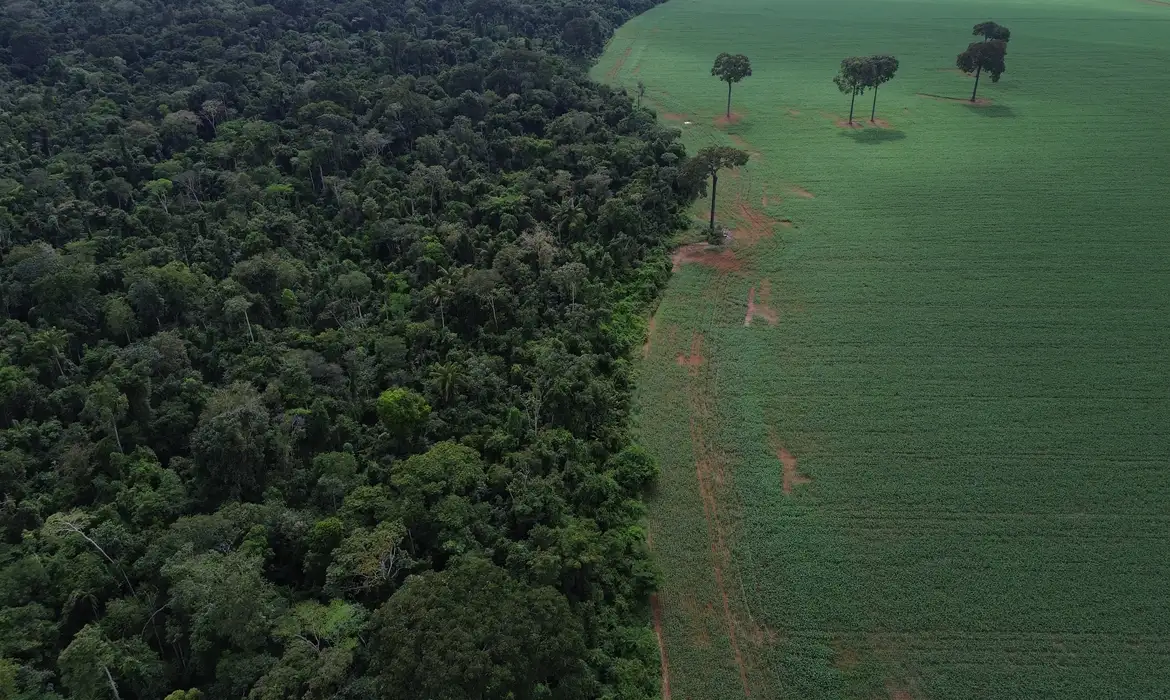
In the face of the worsening climate crisis—amply proven by science, which daily confirms the deepening of catastrophic scenarios both present and future—exempting financial agents involved in globally critical value chains such as mining and agribusiness from responsibility, when these sectors are directly responsible for significant contributions to climate change, is tantamount to issuing a blank check for an announced disaster.
It will be impossible for Brazil to meet its climate targets agreed upon in international forums and to achieve, for example, zero deforestation by 2030—a commitment the federal government has been building for years, particularly through the Climate Plan. Moving from rhetoric to action requires coordinated and sustained effort, including the ability to withstand pressures against objectives that ultimately aim to ensure a minimally habitable planet for all of us and for future generations.
Eliminating the accountability of those who hold the money, in a context of weakening Brazilian environmental legislation, is to move in exactly the opposite direction from securing a livable Earth.
Fabio Ishisaki is a lawyer and public policy advisor at the Climate Observatory (Observatório do Clima). He is a doctoral candidate and holds a master’s degree in Environmental Science from the University of São Paulo (USP), with an MBA in Environmental Management and Technology (USP). He is an associate and board member of the Brazilian Association of Environmental Law Professors (Aprodab) and teaches Environmental and Climate Law in graduate programs.
Maurício Angelo is Executive Director of the Mining Observatory (Observatório da Mineração), a journalism and research center focused on the extractive sector, founded in 2015. He is a doctoral candidate in Environmental Science at the University of São Paulo (USP) and holds a master’s degree in Sustainable Development from the University of Brasília (UnB).
The original version of this article was published in portuguese in Capital Reset.
Descubra mais sobre Observatório da Mineração
Assine para receber nossas notícias mais recentes por e-mail.